
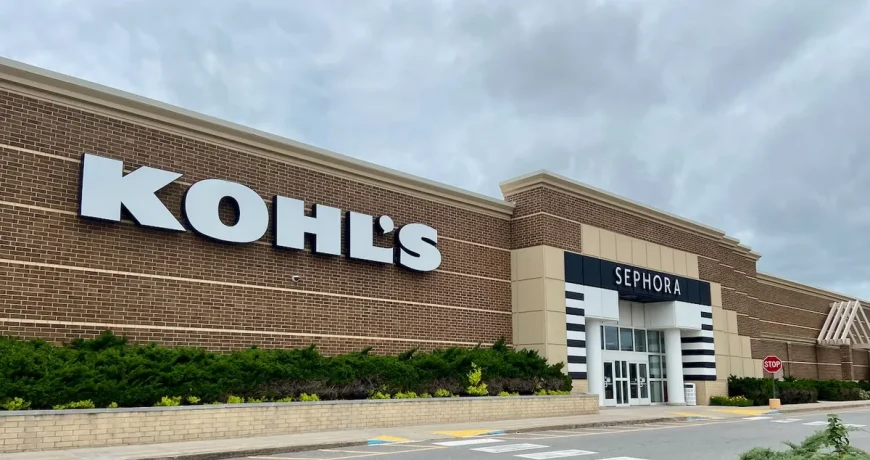
Kohl’s Operations are set for a leadership reset as the department store chain brings in former Foot Locker executive Elliott Rodgers as chief operations officer in September.
The appointment gives Kohl’s a dedicated operations chief for the first time since 2023, when Dave Alves left the company after a short tenure as president and chief operating officer. Since then, different executives have handled pieces of the role while the retailer worked through management changes and uneven performance.
Rodgers joins Kohl’s with more than two decades of retail leadership experience. He spent more than two years at Foot Locker and more than eight years in leadership roles at Ulta Beauty. He also serves on the board of Levi Strauss & Co., where former Kohl’s Chief Executive Michelle Gass now leads the denim company.
For Kohl’s, the hire comes at a sensitive moment. The retailer is trying to sharpen execution across nearly 1,200 stores while facing weaker brand engagement, pressure from off-price competitors and signs that some traffic-driving partnerships are losing momentum.
Kohl’s Operations Get a Dedicated Leader
Rodgers will oversee a wide operational portfolio when he starts in September. His responsibilities will include Kohl’s store network, global supply chain, distribution centers, procurement and loss prevention.
The supply chain team has been reporting directly to Chief Executive Michael Bender, according to the company. Those duties are expected to move under Rodgers once he joins.
That structure matters because Kohl’s Operations sit at the center of the retailer’s turnaround challenge. Store execution, inventory flow, distribution efficiency and shrink control all affect margins and the customer experience.
Department stores have faced years of pressure from changing shopping habits. Consumers now compare prices quickly, move across channels and expect better product availability. At the same time, retailers must manage labor costs, store productivity and fulfillment expenses.
A chief operations officer can help align those priorities. For Kohl’s, the role also gives Bender a senior executive focused on day-to-day execution while the company works to rebuild sales momentum and customer relevance.
Rodgers Brings Experience From Foot Locker and Ulta
Rodgers’ background gives Kohl’s a leader familiar with large store networks and consumer-facing retail brands. Foot Locker and Ulta operate in different categories, but both depend heavily on store execution, merchandising discipline and customer experience.
His time at Ulta may be especially relevant because beauty has become a key traffic driver for Kohl’s through its Sephora shop-in-shop partnership. Kohl’s has used Sephora spaces to bring more shoppers into stores and give customers another reason to visit outside traditional apparel purchases.
However, that strategy faced a recent test. Sephora at Kohl’s posted an unusual sales decline in the most recent quarter, raising questions about whether the partnership can continue to deliver the same lift it gave the retailer earlier in its rollout.
Rodgers will not be responsible for beauty merchandising alone, but his operational role will touch the stores where Sephora spaces must perform. Store labor, layout, inventory handling and customer service all influence whether shop-in-shops convert traffic into sales.
His experience at Foot Locker may also matter as Kohl’s competes for shoppers who increasingly split spending between specialty retailers, online platforms and off-price chains.
Kohl’s Faces a Weaker Customer Franchise
Kohl’s has long been seen as different from many legacy department stores because most of its locations are away from malls. That off-mall footprint once looked like an advantage, especially as enclosed malls lost traffic.
Yet the company has still struggled to define a stronger position in a crowded retail market. Its stores must compete not only with other department stores, but also with off-price retailers that offer value, frequent newness and treasure-hunt shopping.
New research from UBS analysts led by Jay Sole pointed to that challenge. The report said Kohl’s brand awareness has fallen from 76% in 2018 to 58%, a decline of 18 percentage points. Loyalty and customer engagement have also weakened, according to the report.
UBS said customer trial has remained stable at 47%, but a negative gain-loss rate of 8% points to continued churn. That suggests Kohl’s can still attract shoppers, but it is losing too many of them over time.
That is a serious issue for a retailer built around repeat visits, coupons, loyalty programs and broad household categories. If shoppers visit less often or shift spending to off-price peers, Kohl’s must work harder to protect revenue and margins.
Store Execution Becomes a Turnaround Priority
The appointment of Rodgers suggests Kohl’s sees operational discipline as a key part of its next phase. While strategy and merchandising remain critical, weak execution can limit the impact of any turnaround plan.
Kohl’s Operations will have to support better inventory availability, cleaner store presentation, stronger loss prevention and more efficient distribution. These areas rarely attract as much attention as new brand partnerships or marketing campaigns, but they can decide whether customers return.
Loss prevention is also an important part of the role. Retailers across the industry have paid closer attention to shrink, theft and inventory accuracy in recent years, as those issues can weigh on profitability and store productivity.
Procurement and supply chain oversight may also help Kohl’s manage costs at a time when consumers remain selective and competition is intense. Better cost control can create more room for pricing, promotions and margin protection.
Rodgers will inherit a difficult assignment. Kohl’s must stabilize its core business, improve customer engagement and show that its store base can still generate durable value.
The next test will come after he takes over in September. Investors and retail analysts will watch whether Kohl’s can translate the new leadership structure into stronger execution, better store performance and a clearer answer to the pressure coming from off-price rivals.