
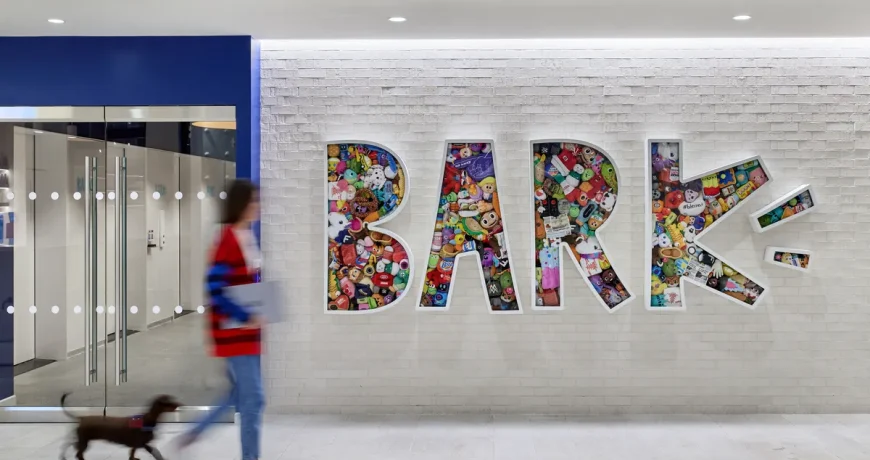
BarkBox strategy is moving beyond the subscription box model that built Bark into a recognizable name in pet retail, as the company confronts falling revenue, a smaller subscriber base and pressure to prove it can grow outside its original direct-to-consumer formula.
Chief Executive Matt Meeker told analysts last week that Bark must rethink how it serves dog owners after years of leaning heavily on personalized boxes. His blunt message was that the brand’s identity can no longer depend on the monthly package arriving at a customer’s door.
“The insight that is guiding our next chapter is this: BarkBox is not a box,” Meeker said.
The comments came after Bark reported fourth-quarter revenue for fiscal 2026 of $86.6 million, down 25% from a year earlier. Full-year revenue fell 18.5% to $394.8 million, showing the scale of the reset now facing the company.
BarkBox Strategy Moves Past Its Original Model
Bark built its business around a simple but powerful consumer idea: deliver toys and treats tailored to a dog’s size, preferences and behavior. That model helped define a generation of direct-to-consumer pet brands.
But the market has changed. Personalization, once a competitive advantage, has become common across retail, especially in pet care. Brands now routinely segment products by breed, age, chewing style, health needs and owner behavior.
Meeker acknowledged that reality on the analyst call, saying Bark had spent too much time improving a model that consumers and competitors had already moved beyond. The company is now trying to build a more detailed understanding of its existing customers while narrowing its product priorities.
That shift matters because the broader pet market remains large. Bark’s challenge is not that consumers have stopped spending on pets. Instead, the company must show that it can capture more of that spending through better products, stronger retention and broader distribution.
The American Pet Products Association projected the U.S. pet industry would reach $165 billion in sales in 2026. That gives Bark a substantial addressable market, but also places it in competition with mass retailers, specialty chains, marketplaces and newer digital brands.
Revenue Decline Adds Urgency to Bark’s Reset
The company’s latest results point to a difficult transition. A 25% quarterly revenue decline shows that Bark is not simply adjusting its brand message. It is trying to stabilize the business while managing a smaller direct-to-consumer customer base.
For fiscal 2027, Bark expects first-quarter revenue of $77 million to $79 million. That would represent a year-over-year drop of 23% to 25%. For the full fiscal year, the company projected revenue of $325 million to $340 million, below the $394.8 million reported in fiscal 2026.
The guidance reflects management’s decision to reduce spending that may have supported short-term sales but weakened profitability. Bark cut total marketing spending by more than $24 million year over year in fiscal 2026.
Meeker said the company chose to protect margins rather than pursue inefficient growth. That decision left Bark with fewer DTC subscribers heading into fiscal 2027, but management pointed to improving retention and higher average order values as signs that the remaining customer base may be healthier.
The trade-off is clear. Bark is accepting lower near-term revenue in exchange for a more durable business model. Investors will now want evidence that the company can turn that smaller base into steadier profit and better cash performance.
Commerce and Bark Air Become Bigger Priorities
A central part of the BarkBox strategy is diversification. The company is placing more emphasis on its Commerce segment, which includes wholesale and marketplace channels, rather than relying only on subscriptions sold directly to consumers.
That move could help Bark reach customers who may not want a monthly subscription but still buy toys, treats and pet products through major retailers or online marketplaces. It also gives the company more ways to convert brand awareness into sales.
Bark also expects Bark Air, its dog-friendly charter airline, to contribute to the next stage of growth. Together, Commerce and Bark Air are expected to represent more than $100 million of fiscal 2027 revenue.
The airline business gives Bark a distinctive extension beyond products, but it also adds complexity. Travel services operate differently from consumer goods, and investors will likely watch whether Bark Air can scale without distracting from the company’s core pet retail business.
Still, the broader idea fits Meeker’s message. Bark wants to define itself around the relationship between dogs and their owners, not around the box itself.
Stock Market Pressure Raises the Stakes
Bark’s operating reset comes after a period of market pressure. The company completed a 1-for-20 reverse stock split effective April 1 after receiving a noncompliance notice from the New York Stock Exchange in July 2025.
The move was intended to help Bark avoid delisting. It followed an earlier warning cycle after the company previously worked to regain compliance in 2024.
Bark also reviewed two take-private offers in January, but the company declined both before the reverse stock split. That sequence underlines the pressure facing management as it seeks to convince public-market investors that the business can recover.
The company’s path forward now depends on execution. Management must balance margin protection with customer growth, expand wholesale and marketplace reach, and prove that new initiatives can offset the decline in legacy subscription revenue.
Bark still operates in a large and resilient pet market. However, its future will depend on whether it can turn customer loyalty into a broader business model. The next several quarters will show whether the company’s reset can move Bark beyond the box and back toward sustainable growth.