
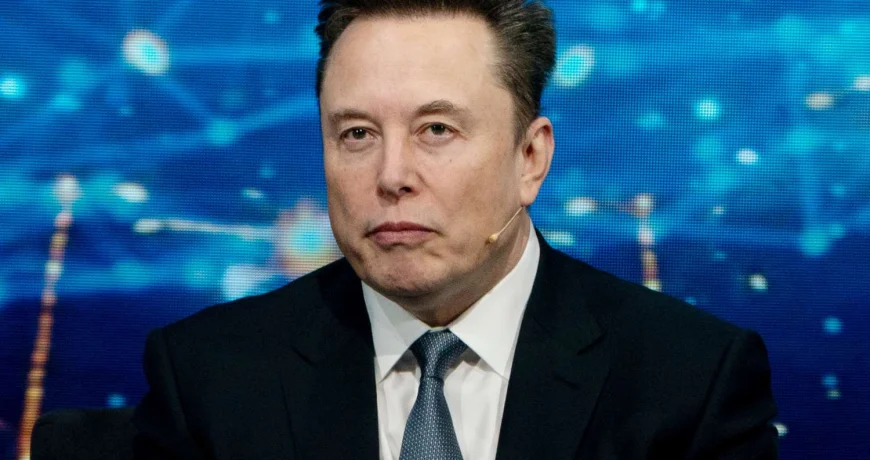
SpaceX trillionaire headlines now define one of the biggest business moments of the decade after the company’s historic Nasdaq debut pushed Elon Musk’s estimated fortune above $1 trillion.
The rocket and satellite company priced its IPO at $135 per share, opened around $150 and traded sharply higher during its first session. Reuters reported that SpaceX raised about $75 billion and reached a valuation above $2 trillion during early trading, making it the largest IPO in history and one of the most valuable public companies in the world.
Forbes declared Musk the world’s first trillionaire after SpaceX’s market debut created a public valuation for one of his largest holdings. The milestone is historic because it moves personal wealth into territory previously reserved for theory, forecasts and speculation.
The story is not only about Musk. It is about how investors are pricing the future.
SpaceX is being valued as more than an aerospace company. It is being treated as a platform for launch services, satellite broadband, national security technology, artificial intelligence infrastructure and long-term space development.
That is why this IPO matters.
It signals that the market now sees space infrastructure as one of the next great centres of global economic power.
Quick Facts About the SpaceX Trillionaire Moment
| Category | Detail |
|---|---|
| Company | SpaceX |
| Founder | Elon Musk |
| Market debut | Nasdaq |
| IPO price | $135 per share |
| Opening price | Around $150 per share |
| Reported IPO raise | About $75 billion |
| Valuation during debut | Above $2 trillion |
| Wealth milestone | Musk estimated above $1 trillion |
| Main business lines | Rockets, Starlink, satellites and space systems |
| Key theme | Space economy becomes a public-market giant |
Why SpaceX Created the First Trillionaire
SpaceX created the first publicly recognised trillionaire because of the relationship between ownership and valuation.
Musk owns a large stake in SpaceX. When the company was private, the value of that stake depended on private-market estimates. Once SpaceX listed on Nasdaq, public investors helped set a live market value for the company.
That value was enormous.
As SpaceX traded above its IPO price and moved beyond a $2 trillion valuation, Musk’s ownership stake became valuable enough to push his estimated wealth above $1 trillion.
This does not mean Musk received $1 trillion in cash.
Most of his wealth remains tied to shares, options and company stakes. It can rise or fall with the market. But the listing created a public reference point for wealth on a scale never recorded before for an individual.
SpaceX Is No Longer Just a Rocket Company
The market reaction to SpaceX shows that investors are not valuing it only for rocket launches.
Rocket technology built the company’s reputation, but the wider investment case is much broader.
SpaceX now sits across several high-growth areas:
- Reusable rocket launches
- Satellite broadband through Starlink
- Government and defence-linked space services
- Global communications infrastructure
- Space logistics
- Future orbital and deep-space projects
This makes SpaceX difficult to compare with traditional aerospace companies.
It has hardware, software, infrastructure, subscriptions, government contracts and future technology narratives all inside one company.
That combination helps explain why investors were willing to pay such a high valuation.
Starlink Is Central to the SpaceX Story
Starlink may be one of the biggest reasons investors are excited about SpaceX.
Launches are important, but satellite internet gives SpaceX a recurring business model. Starlink can serve homes, companies, aircraft, ships, remote communities and governments.
That creates a different kind of value.
A rocket launch is a major event. A broadband subscription can produce ongoing revenue month after month.
SpaceX also has a powerful advantage because it can build satellites, launch them using its own rockets and operate the network directly.
This vertical control gives the company speed and flexibility.
If Starlink continues expanding globally, it could become one of the most important communications networks in the world. Investors are clearly pricing in that possibility.
Why Investors Bought Into the IPO
Investors bought into the SpaceX IPO because the company offers a rare mix of proven execution and long-term imagination.
SpaceX has already changed the launch industry through reusable rockets. It has built a massive satellite network. It has won major contracts. It has created one of the strongest technology brands in the world.
At the same time, its biggest ambitions still lie ahead.
That future-facing story is powerful.
Investors are not simply buying what SpaceX is today. They are buying what the company might become if space, satellite communications and orbital infrastructure become as important as many analysts expect.
That optimism helped create huge demand for the IPO.
But optimism also brings risk.
The Valuation Question Investors Cannot Ignore
A valuation above $2 trillion is difficult to justify unless SpaceX delivers extraordinary long-term growth.
That is the central question after the IPO.
Can the company expand Starlink fast enough? Can it maintain launch dominance? Can it manage costs? Can it turn future space ideas into profitable businesses? Can it balance government work with commercial markets?
These questions matter because public markets can change mood quickly.
A strong debut does not guarantee long-term success. If SpaceX misses growth expectations or faces major setbacks, the stock could become volatile.
The company now carries the expectations of a mega-cap technology stock.
That is a major shift from its private-company past.
What Public Listing Changes for SpaceX
Going public gives SpaceX more capital, visibility and market power.
It also brings pressure.
Public investors expect regular reporting, clear financial performance and stronger governance. Analysts will examine revenue, margins, capital spending, contracts, Starlink growth and long-term profitability.
This scrutiny may be useful because it forces discipline.
But it may also create tension with Musk’s long-term vision. SpaceX has always pursued ambitious goals that require patience, spending and technical risk.
Public markets often want faster proof.
The challenge for SpaceX is to keep its bold culture while meeting the expectations of shareholders.
What This Means for Elon Musk’s Business Empire
Musk now has two giant public-market pillars: Tesla and SpaceX.
Tesla made him the world’s richest person. SpaceX made him the world’s first trillionaire.
That changes the balance of his empire.
Investors now have another direct way to buy into Musk’s business universe. Some may see SpaceX as the more exciting long-term opportunity because it touches space, satellites and communications. Others may still prefer Tesla because of electric vehicles, energy storage, robotics and autonomy.
The market will now compare the two more closely.
It will also ask whether Musk can divide his attention effectively across SpaceX, Tesla, xAI, X, Neuralink and other ventures.
Leadership capacity may become one of the biggest investor questions.
Why This Milestone Matters for the Space Economy
The SpaceX IPO validates the space economy in a new way.
For decades, space was mostly a government-led field. Private companies supplied equipment and services, but national agencies dominated the narrative.
SpaceX changed that model.
Its public listing now shows that investors believe commercial space can support trillion-dollar valuations.
That could influence other companies in launch, satellites, defence technology, Earth observation, space manufacturing and communications.
If SpaceX performs well as a public company, more space-related firms may seek public listings or attract larger private funding rounds.
In that sense, the IPO may mark the beginning of a broader space-market cycle.
The Inequality Debate Will Grow Louder
Musk becoming a trillionaire will intensify debate about wealth concentration.
Supporters will argue that the milestone reflects innovation, risk-taking and the creation of companies that changed industries. They will point to reusable rockets, electric vehicles, satellite internet and the possibility of expanding human activity beyond Earth.
Critics will point to the scale of the fortune.
A single person being worth more than $1 trillion raises questions about taxation, market power, government contracts, labour, regulation and inequality.
This debate will be especially intense because SpaceX works in areas connected to national security and communications infrastructure.
The issue is not only how much money Musk has. It is how much influence his companies may hold over systems the world increasingly depends on.
Why the First Trillionaire Came From Technology
The first trillionaire did not emerge from oil, banking, retail or real estate.
He emerged from technology platforms and future infrastructure.
That is the deeper story.
Modern markets reward companies that appear capable of controlling future systems. Tesla was valued not only as a carmaker but as a bet on electric mobility, software and automation. SpaceX is being valued not only as a launch provider but as a bet on satellites, communications and space infrastructure.
This shows where investor imagination has moved.
The biggest fortunes are now built around networks, platforms, data, hardware, AI and infrastructure that may define the next economy.
SpaceX is at the centre of that shift.
Key Takeaways
- SpaceX’s IPO pushed Elon Musk’s estimated net worth above $1 trillion.
- Forbes declared Musk the world’s first trillionaire after the listing.
- SpaceX priced its IPO at $135 per share.
- Shares opened around $150 and traded higher during the debut.
- Reuters reported that SpaceX raised about $75 billion.
- The company’s valuation moved above $2 trillion.
- Musk’s wealth is mostly tied to ownership stakes, not cash.
- Starlink is a major part of SpaceX’s valuation story.
- SpaceX is being valued as a future infrastructure company, not only a rocket business.
- The IPO may reshape the market for space and technology listings.
- The milestone raises questions about wealth concentration and private control of strategic infrastructure.
- Musk’s trillionaire status can change if SpaceX or Tesla shares fall.
Frequently Asked Questions
Why did SpaceX make Elon Musk a trillionaire?
SpaceX made Elon Musk a trillionaire because its Nasdaq listing gave the company a public valuation above $2 trillion, lifting the estimated value of Musk’s ownership stake.
What was the SpaceX IPO price?
SpaceX priced its IPO at $135 per share.
What price did SpaceX open at?
SpaceX opened around $150 per share during its Nasdaq debut.
How much did SpaceX raise in the IPO?
SpaceX raised about $75 billion, according to Reuters.
What is SpaceX worth after the IPO?
SpaceX traded at a valuation above $2 trillion during its market debut.
Is Elon Musk’s $1 trillion fortune in cash?
No. Most of Musk’s wealth is paper wealth tied to shares, options and company stakes.
Can Elon Musk lose trillionaire status?
Yes. If SpaceX or Tesla shares decline sharply, Musk’s estimated net worth could fall below $1 trillion.
Why is Starlink important to SpaceX?
Starlink is important because it gives SpaceX a satellite internet business with recurring revenue potential and global reach.
Why is the SpaceX IPO important?
The IPO is important because it is the largest in history, gives public investors direct exposure to SpaceX and validates the commercial space economy at massive scale.
Why does Musk becoming a trillionaire matter?
It matters because it marks a new era in wealth creation, technology markets and debate over innovation, inequality and private economic power.
Conclusion
SpaceX has done more than enter the public market. It has created the world’s first publicly recognised trillionaire.
Elon Musk’s wealth has crossed a historic threshold because investors are valuing SpaceX as one of the most important technology and infrastructure companies of the future. Rockets built its reputation, but Starlink, satellite communications and long-term space systems are driving the larger market story.
The milestone is remarkable, but it also brings pressure.
SpaceX must now prove that a valuation above $2 trillion can be supported by growth and execution. Musk must manage the scrutiny that comes with controlling several major companies. Investors must decide whether the promise of the space economy justifies the price.
For now, one thing is clear.
The first trillionaire age has begun, and it began with SpaceX.