
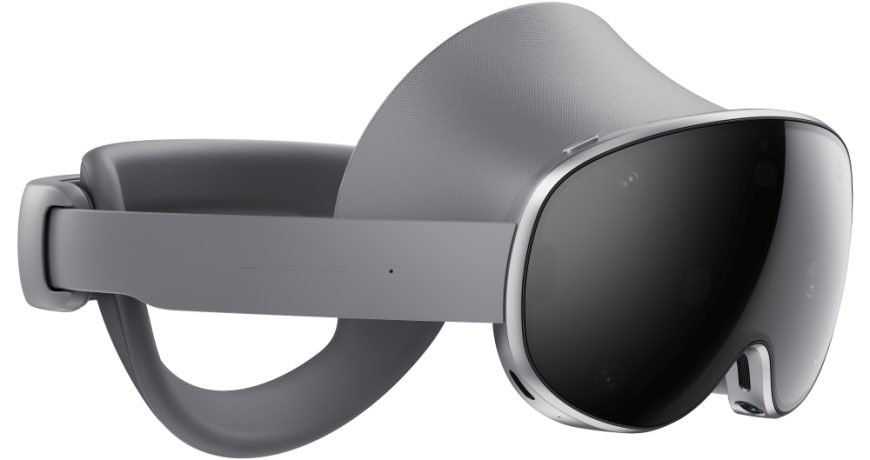
Samsung AI glasses could soon become one of the most important new categories in wearable technology. The company has revealed fresh details about its upcoming smart glasses, which will use artificial intelligence to analyze what users see and deliver real-time information.
The concept behind Samsung AI glasses focuses on connecting wearable devices directly to smartphones. Instead of processing data on the glasses themselves, the device captures visual input and sends it to a paired phone where AI systems analyze and respond to it instantly.
Samsung AI Glasses Designed to Work With Smartphones
Samsung AI glasses will feature an eye-level camera designed to capture what the user is looking at. This visual data is then transmitted to a connected smartphone where artificial intelligence systems process the information.
The system allows AI services to understand the user’s surroundings and provide contextual responses. For example, the glasses could identify objects, translate text, or deliver directions without requiring users to manually open an app.
Samsung executives say this approach ensures that the device remains lightweight while still delivering powerful AI capabilities.
Samsung AI Glasses Part of a Broader XR Strategy
The development of Samsung AI glasses is part of a larger effort by the company to expand its presence in extended reality technologies.
Samsung has been working with technology partners including Qualcomm and Google since 2023. These collaborations aim to combine augmented reality, virtual reality, and artificial intelligence into new wearable devices.
One result of that partnership is the Samsung Galaxy XR headset, which runs on Google’s Android XR platform designed for mixed-reality devices.
While headsets provide immersive experiences, Samsung believes glasses could become the more practical everyday device.
Why Samsung AI Glasses Could Replace Smartphones in Some Situations
Many technology companies believe smart glasses could eventually become a companion to smartphones. In some cases, they might even replace certain phone interactions entirely.
Instead of pulling out a phone, users could simply ask an AI assistant for help. The glasses’ camera would supply contextual data while the smartphone handles the computing workload.
The AI assistant could then respond instantly by identifying objects, suggesting actions, or retrieving information relevant to the user’s environment.
This approach could create a more seamless connection between the digital world and everyday life.
Competition in the Smart Glasses Market
Samsung AI glasses will enter a market currently dominated by Meta Platforms.
Meta’s Ray-Ban Meta smart glasses control a large share of the global smart glasses market. These devices allow users to capture photos and video, listen to audio, and interact with an AI assistant through voice commands.
However, the category is attracting increasing interest from other technology companies.
Chinese technology firm Alibaba and augmented reality specialist Xreal are also developing smart eyewear products.
Samsung may benefit from its large ecosystem of devices. By linking smart glasses to Galaxy smartphones and wearables, the company could create a connected platform that competitors may struggle to match.
Technical Challenges Facing Samsung AI Glasses
Despite the excitement surrounding Samsung AI glasses, several technical hurdles remain.
Battery life remains a major challenge for wearable devices. Integrating cameras, microphones, speakers, and wireless connectivity into lightweight glasses requires careful engineering.
Heat management and device weight must also be addressed to ensure the glasses remain comfortable for daily use.
Privacy concerns are another important issue. Devices with always-available cameras raise questions about surveillance and consent in public spaces.
Manufacturers have attempted to address these concerns by adding recording indicators and limiting certain camera features.
Launch Timeline for AI Glasses
Samsung has not yet confirmed whether its smart glasses will include a built-in display. Instead, users may rely on their smartphones or smartwatches when a screen is required.
The company plans to prepare a version of the product for industry partners later this year.
If the technology proves successful, Samsung AI glasses could represent the next major step in personal computing.
Samsung AI glasses reflect the technology industry’s growing focus on wearable artificial intelligence devices. By combining camera-based visual recognition with smartphone-powered AI processing, the company hopes to create a more natural way for people to interact with digital assistants.
Although technical and privacy challenges remain, the success of smart glasses could reshape how users access information in the future. If Samsung’s vision becomes reality, wearable AI devices may soon become as common as smartphones today.